

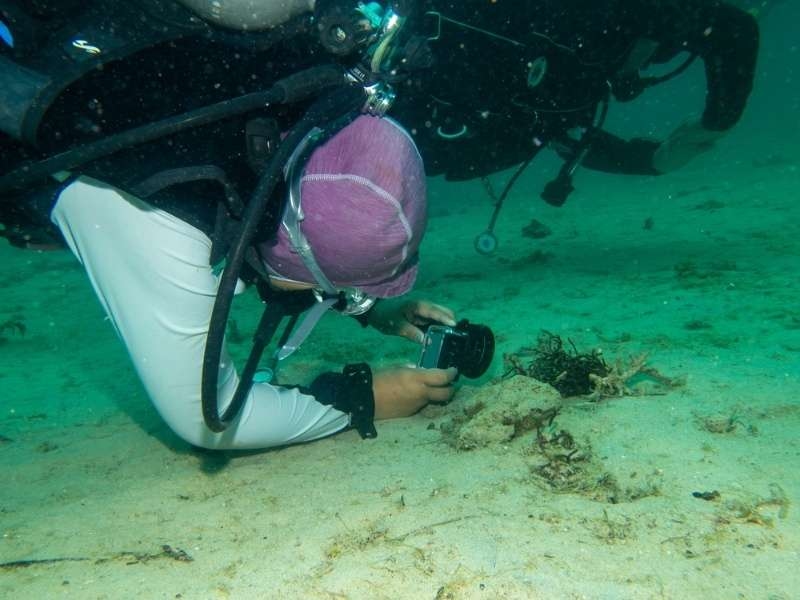
Most people think diving means coral reefs, bright fish, and clean water. That’s only half the story. There’s another side—messier, darker, quieter. It hides in places that look dead at first glance. Black sand, silt, debris, almost nothing moving. But stay still, look closer, and things begin to appear. Strange shapes. Eyes blinking from nowhere. Creatures that don’t want to be seen.
This is where muck diving lives. It’s not pretty in the usual way, but it pulls you in fast. You stop chasing big fish and start noticing details. Tiny things. Weird things. In this blog, we’ll break down how muck diving works, where to go, and what makes it addictive.
Muck diving is simple to describe but hard to fully get. You dive in areas with sandy, silty, often volcanic seabeds. Not coral-heavy. Not colorful. At first, it feels empty.
Then suddenly—life. Tiny creatures hide in the muck. They're camouflaged so well you’ll miss them ten times before spotting one. It’s slow diving. No rushing.
Reef diving is loud. Movement everywhere. Muck diving is quiet, almost tense. You hover, scanning the ground, waiting for something to move. And when it does, it’s usually bizarre.
Expect:
It’s strange. That’s the point.
Not everyone enjoys it. If you want big sharks or fast action, this isn’t it. But if you like detail, patience, and slow discovery, it clicks. Hard.
Also Read: How to Improve Your Air Consumption While Diving
The best places to muck dive aren’t always the prettiest—they’re the ones where strange marine life quietly thrives beneath the sand.
Indonesia dominates muck diving. The biodiversity is insane. The waters are warm, visibility is decent enough, and the seabeds are perfect for hidden life.
The Lembeh Strait is often called the capital of muck diving. And not by accident. Divers from all over the world go there just for macro life. Bali also offers strong sites—especially Tulamben. The mix of wrecks and sandy slopes makes it interesting.
Next comes the Philippines. Anilao stands out. It’s less crowded than some Indonesian sites but just as rich in species. Dauin, near Dumaguete, also deserves mention. Calm waters, easy dives, plus a steady stream of rare finds.
Then there’s Papua New Guinea. Less accessible, more raw. But if you go, you’ll see things few others have.
These places share a few traits:
That mix creates a perfect hiding ground. Not for big fish, but for the strange ones.
These are the specific spots where the seabed looks empty at first yet hides some of the strangest marine life you’ll ever see.
Some dive spots don’t look like much on a map. Yet they produce rare sightings daily. Hairball, in Lembeh, is famous for the hairy frogfish. Tiny patch of seabed. Huge reputation.
Secret Bay in Bali—cold, murky, but packed with odd species. Not comfortable, but worth it. Anilao’s Twin Rocks—mix of reef and muck, so you get both worlds in one dive.
A good muck diving site isn’t about beauty. It’s about texture and stillness.
Look for:
These areas let creatures hide easily. That’s why they gather.
Night diving changes everything. Creatures come out. Behavior shifts. Some species only appear after dark. Others hunt, mate, or move around. So the same site—completely different feel at night.
Don't Miss: Common Scuba Diving Mistakes You Need To Avoid For Safety
Camouflage rules muck diving. Animals here don’t run—they hide. Frogfish blend into sponges. You can stare right at one and not see it.
Leaf scorpionfish look like drifting leaves. Until they move. The mimic octopus is this one’s famous. It copies other animals to scare predators. Snake, lionfish, flatfish. Not perfect, but enough.
Many creatures are small. Really small. Nudibranchs—colorful sea slugs with insane patterns. Each species looks different.
Pygmy seahorses—almost microscopic. They cling to coral, nearly invisible. Shrimp—some transparent, others patterned like art. They clean fish, hide in anemones, or burrow.
You don’t chase them. You find them slowly.
What makes muck diving special isn’t size—it’s behavior. Watching a blue-ringed octopus hunt. Seeing a cuttlefish change color in seconds. A mantis shrimp reacting to your presence.
These moments feel close, almost personal.
Gear alone won’t save you here; technique decides everything, and small mistakes show fast.
You can’t touch the seabed. It’s fragile. One wrong move—silt clouds everything. So buoyancy control matters more here than anywhere else. You hover just above the ground, steady, calm.
Fast divers miss everything. Move slowly. Stop often. Look carefully. Then look again. Sometimes your guide points at something, and you still can’t see it. That’s normal.
Muck diving is perfect for macro photography. A good macro lens helps. So does proper lighting. But photography can distract. Beginners should focus on spotting first. Then shooting.
Suggested Reading: Understanding Decompression Sickness Prevention and Causes
Muck diving isn’t about beauty in the usual sense. It’s slower, stranger, and sometimes uncomfortable. But it shows a side of the ocean most people ignore. Small creatures, complex behaviors, hidden ecosystems—things you’d never notice on a reef dive. It rewards patience, sharp eyes, and a willingness to look where others don’t. Not every dive will be exciting, yet the ones that are stay with you longer than expected.
Yeah, it's safe if you're careful and stick with someone experienced. The conditions aren't always easy—visibility can be bad, and the seabed is sometimes uneven. If you've got a solid grasp of the basics and you let a trained guide lead the way, you'll be fine.
You don't need anything fancy, but having the right gear makes a big difference. Good buoyancy control is a must. If you're into underwater photography, a macro lens comes in handy. And honestly? A solid dive light is great for spotting tiny creatures in murky water.
You can definitely go it alone, but you’ll almost always miss the best parts. Guides just know the hidden spots and what’s actually worth your time. They also make sure you don’t mess up the environment along the way.
That really depends on where you're going. Lots of muck diving spots are open all year. You'll get clearer water and better visibility during calm seasons with less current, though. Night dives are pretty unique and worth trying whenever you're there.
This content was created by AI