

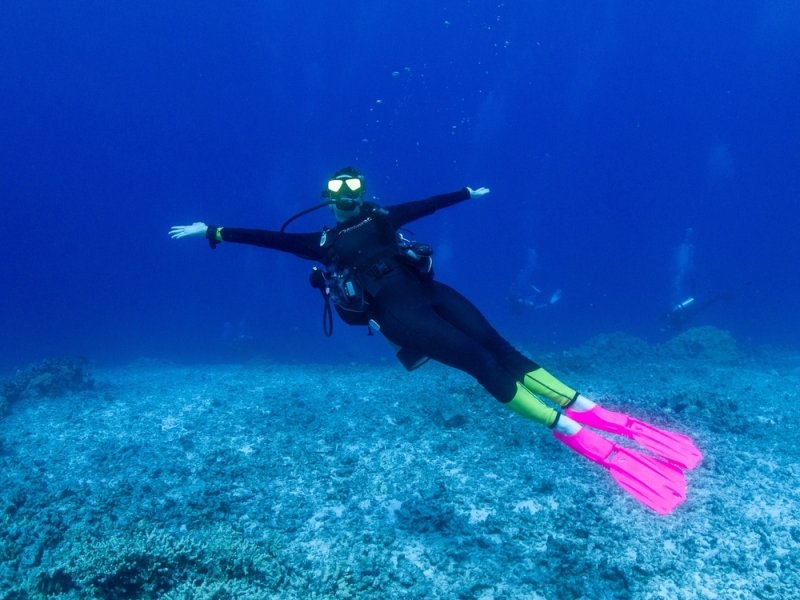
Few places on earth reward a wetsuit and a tank quite like Hawaii. Every island has its own underwater personality, and honestly, that's what keeps people coming back. One trip might mean swimming through a lava tube, the next spotting a manta ray gliding past at night. Whether you've logged three dives or three hundred, scuba diving in Hawaii tends to leave an impression that outlasts the sunburn.
Most tropical diving spots are built around barrier reefs, but Hawaii works differently. These islands are volcanic, which means arches, caves, and lava tubes instead of the usual coral wall. A lot of sites sit just offshore too, so you're not burning half your day on a boat ride just to get in the water.
Here's the thing about Hawaii's location: it's isolated. Sitting in the middle of the Pacific, far from any other landmass, gave local species room to evolve on their own timeline. Roughly a quarter of the reef fish here don't exist anywhere else, so there's a real chance you'll see something you can't quite name later.
Picking an island really comes down to your comfort level, what you're hoping to see, and how much time you've got. Each island has its own vibe underwater, and that's worth knowing before you book flights and dive shops for the best diving in Hawaii.
Oahu scuba diving is mostly known for its wrecks, and the Sea Tiger and YO-257 are the headliners. Both have turned into thriving artificial reefs, thick with eels, turtles, and fish that clearly don't mind the company.
Ask any regular where to go, and scuba diving in Maui usually starts with Molokini Crater. It's this partially sunken volcanic bowl with water so clear it almost feels staged, and the back wall drops off dramatically for anyone wanting more depth.
Kona's claim to fame is the manta ray night dive, one of the only regular spots for it worldwide. You hover with a light on while these enormous rays swoop overhead, chasing plankton the light draws in. It's genuinely hard to describe until you've seen it yourself.
Kauai skews toward the more experienced end of the spectrum, mostly because of the currents. Sheraton Caverns near Poipu is the standout, a lava tube system where turtles hang out and reef sharks occasionally cruise by.
| Island | Known For | Best Suited For |
| Oahu | Shipwrecks, easy shore access | Beginners to intermediate |
| Maui | Molokini Crater, turtles | Intermediate to advanced |
| Big Island | Manta ray night dives, lava tubes | All levels |
| Kauai | Sea caves, remote reefs | Experienced divers |
It really is, particularly around Oahu and parts of Maui. Most shops run intro dives with a certified instructor at your side the whole time, so you're not left guessing. The reefs stay shallow enough to keep things low pressure, literally and figuratively, while still delivering turtles and colorful fish worth the trip.
Explore More: Curious what diving looks like elsewhere in the world? This roundup of Top 10 Scuba Diving Destinations to Explore Worldwide is worth a look for future trip ideas.
If there's one thing that sets the best scuba diving in Hawaii apart, it's what swims past while you're down there. Depending on the season, you might cross paths with turtles, mantas, reef sharks, or eagle rays without much effort at all.
Late spring through early fall usually brings the calmest water across most of the islands. Winter can get rougher, especially on north-facing shores, and that swell can shut down access to some of the more exposed sites entirely.
Planning to dive beyond Hawaii too, without blowing the budget? This guide to Best Cheap Scuba Diving Destinations for Travelers is a solid place to start comparing.
Stick with certified local operators who actually know the conditions at each site, not just the postcard version. Check swell forecasts before you book, especially in winter, and be honest with yourself about whether a site matches your certification level.
At the end of the day, scuba diving in Hawaii offers something most destinations can't match: volcanic terrain, rare marine life, and real variety from one island to the next. Oahu is forgiving for new divers, Maui and Kona reward a bit more experience, and Kauai is for those ready to work for it. Match the island to your skill level, watch the season, and book with people who know the water.
Honestly, it depends on your comfort level. Oahu is the easy pick for beginners, with shore access and nearby wrecks, while Maui and the Big Island suit divers chasing Molokini Crater or a manta ray night dive near Kona.
For standard dives, yes, most operators want to see open water certification. That said, plenty of shops run introductory or discover scuba sessions for first-timers, complete with hands-on instruction and a guided shallow dive.
It's not cheap, but it's not outrageous either. Expect somewhere between 100 and 200 dollars for a two-tank dive, usually with gear included. Certification courses and specialty trips like manta ray dives will run you more.
Pretty good, most of the time. You're typically looking at 60 to 130 feet depending on where and when you go. Molokini near Maui and the sites around Kona tend to offer the clearest water, especially in summer.
They can. Plenty of Kona operators are happy to take beginners on manta ray night dives, as long as you're okay being in open water after dark. Instructors keep you near the surface with lights, so the rays come to you.
This content was created by AI